Empty walls are the Metro Detroit default
If your house went up before roughly 1950 — and a great many houses in Ferndale, Royal Oak, Berkley, Oak Park and Detroit proper did — there is a strong chance the exterior wall cavities are completely empty. Not under-insulated. Empty. Lath, plaster, a stud bay full of air, sheathing, siding.
You know it by feel. One room is always colder. An exterior wall is cold to the touch in winter. Furniture against that wall feels clammy. The room above the porch is unusable from December to March.
What dense-pack does
Dense-pack is cellulose blown into a closed cavity under pressure, to a density high enough that it packs tight against every surface and does not settle later. It is a different install from the loose fill that goes on an attic floor — same material, much higher density, delivered through a smaller hose fed deep into the bay.
The pressure is what makes it work in a wall. Loose material in a vertical cavity would settle and leave a cold gap along the top of every bay within a few years. Dense-pack does not, because there is nowhere for it to go.
It also flows around things. Old walls are full of obstructions — knob-and-tube remnants, diagonal let-in bracing, fire blocking somebody added in 1962, plumbing that should not be there. A dense-packed cavity fills around all of it. There is no version of this job where somebody cuts batts to fit, because nobody is opening the wall.
How we get in
From the exterior, where we can. With vinyl or aluminum siding, a course gets unclipped, we drill, fill and plug, and the siding goes back. When it is done properly you cannot tell afterward.
From the interior, where we must. Brick, stone and some stucco make exterior access impractical. Then we work from inside, drill above the baseline of the room, fill, and patch. Patched drywall needs paint, and we are straight with you about that up front — it is your call whether the trade is worth it.
Bay by bay. Every stud cavity is its own sealed box. There is no way to fill a wall from one hole, and any quote that suggests otherwise should worry you.
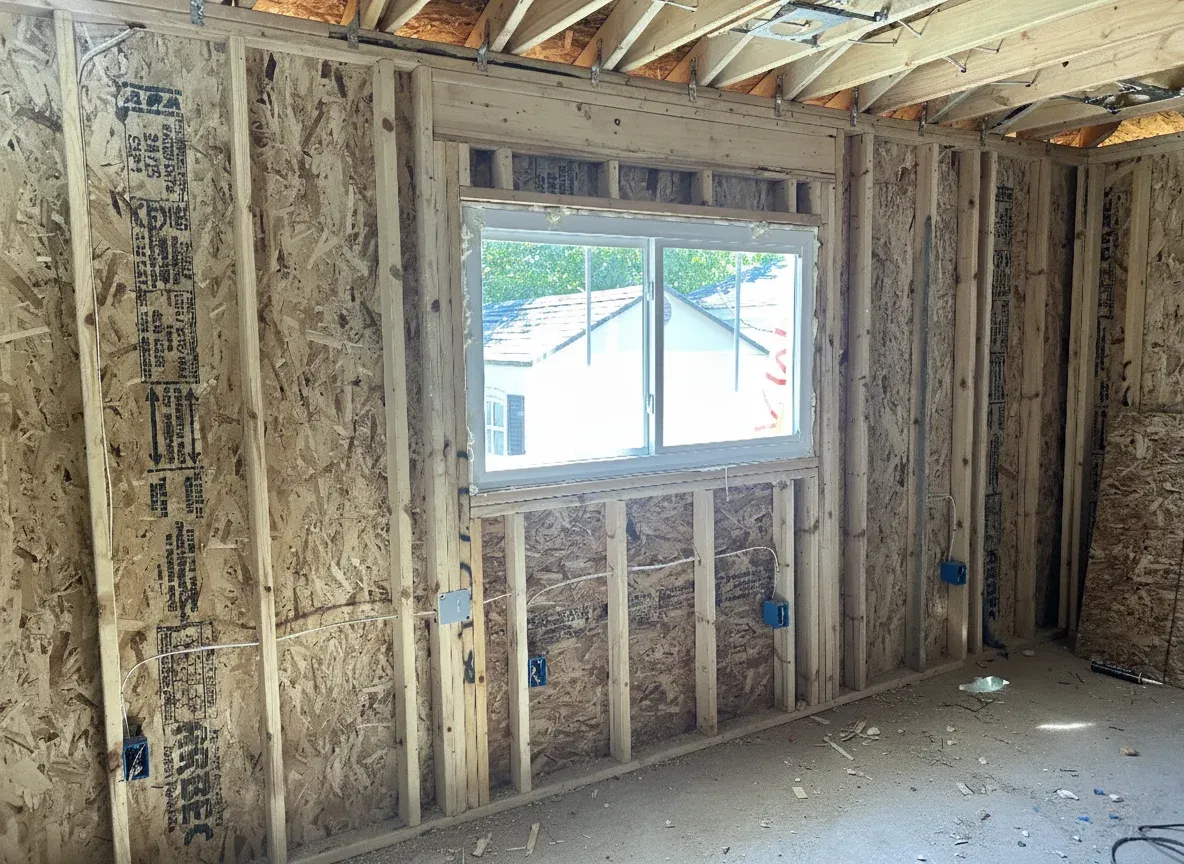
Before
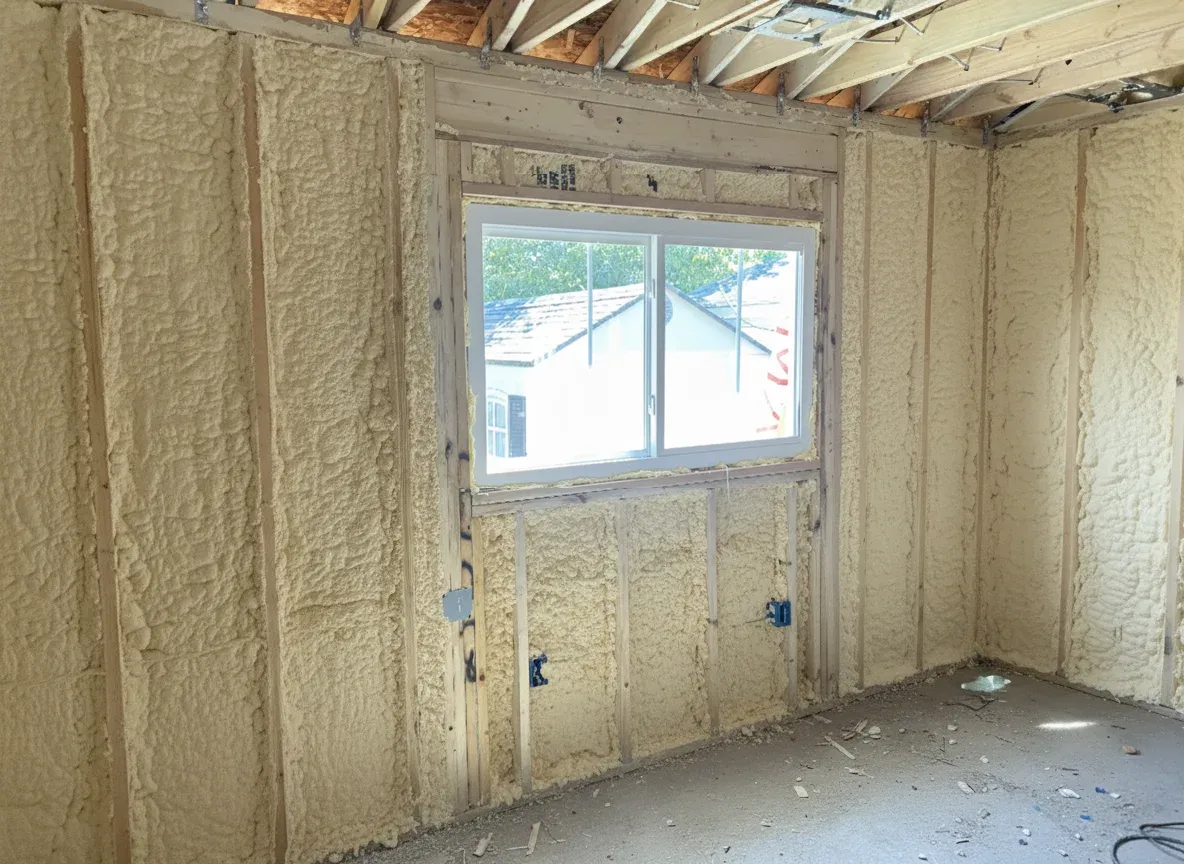
After
What we check first
Wall insulation is real work at real cost, and it is usually not where we would start.
The attic is almost always the better first dollar — more heat leaves through the ceiling plane than the walls, and attic work is cheaper per unit of comfort gained. If you call us about cold walls and your attic is at R-13, we are going to tell you to do the attic first. That is not us turning down work; it is us not wanting you to spend four figures and still be cold.
We also look for the actual culprit before assuming it is the walls:
- Rim joist. The band of framing where the floor meets the foundation is a notorious leak point and much cheaper to fix. Covered under crawl space and basement work.
- Windows. Sometimes it really is the windows, and we will say so even though we do not sell windows.
- Knee walls. In a bungalow, the cold room upstairs is more often an uninsulated knee wall than an empty exterior wall.
Older wiring
If your house still has active knob-and-tube wiring, that changes the conversation. Knob-and-tube was designed to shed heat into open air, and burying it in insulation is not safe. We check for it, and if we find it live, the honest sequence is electrical work first, insulation second. We would rather lose the job than pack a cavity around it.