We will try to talk you out of this
Full insulation removal is an expensive job for a homeowner, and it gets quoted more often than it is genuinely needed.
Old fiberglass is not automatically bad fiberglass. If it is dry, clean and rodent-free, it still has R-value, and the correct move is to blow cellulose over the top of it and let it keep working underneath. That is a top-up, it costs roughly half as much, and it takes a day.
So when somebody calls us after being told their attic needs to be gutted, we go look. Often it does not.
The three things that genuinely force removal
Rodent contamination. Droppings and nesting through the material, urine-soaked and matted sections, and the ammonia smell that hits you when you open the hatch on a hot day. This is a health issue, and no amount of clean material on top makes it not one.
Water damage. Insulation that got wet under a roof leak has already lost most of its R-value — wet fiberglass compresses and stops working, wet cellulose mats. Even after the roof is fixed, the material does not recover. It also stays damp long enough to grow things.
Mold. On the sheathing, on the framing, or in the insulation itself. It gets addressed before anything new goes down, and depending on extent that may involve a remediation contractor rather than us.
If none of those describe your attic, you probably do not need this service.
How removal actually works
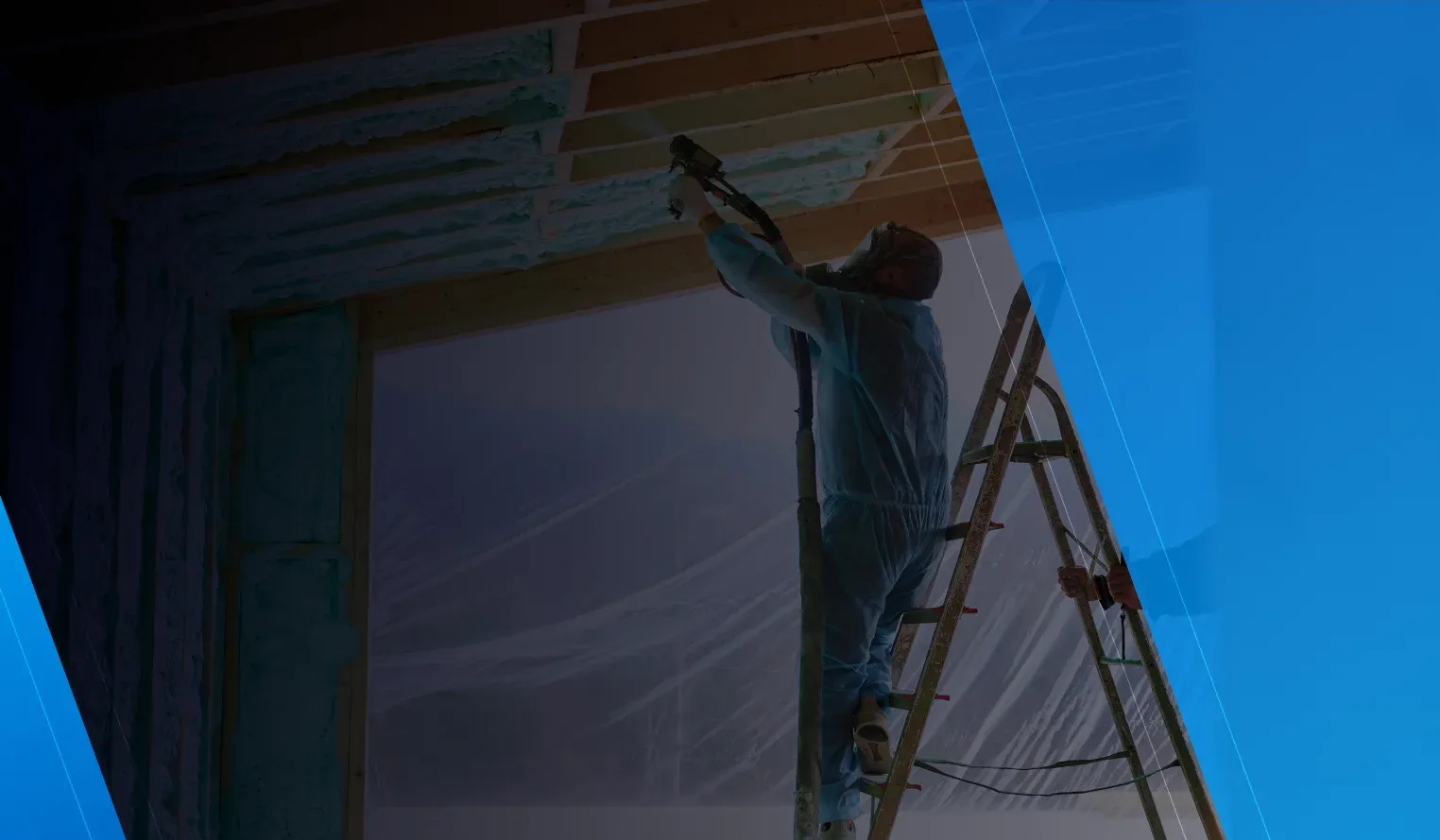
Vacuum, not shovels. A commercial insulation vacuum runs a hose into the attic and the material goes directly into sealed bags outside. Nobody carries open bags of contaminated insulation down through your hallway. Containment is the whole point — the material is the hazard, and moving it badly spreads it through the house.
Respirators and containment. The crew works in PPE and the access point is sealed off from the rest of the home.
Deck cleaning and treatment. Once the material is out, the attic deck gets cleaned and, where contamination warrants it, treated. This is also the first time anybody has actually seen your attic floor in decades, which is when we find the things nobody knew about — the bath fan venting into the attic, the disconnected duct, the ceiling penetration you could see daylight through.
Entry points. For rodent jobs this is the step that determines whether the work lasts. If the way in is still open, they come back and you pay twice. In Metro Detroit homes the usual suspects are gable vents with rusted-out screening, the junction where a dormer meets the main roof, and open soffit corners.
Then we rebuild it properly
Removal on its own leaves you with a clean, empty, completely uninsulated attic, which is worse than where you started. The replacement is the point.
With the deck bare, we can do the job better than we ever could on a top-up:
- Air seal everything, with full visibility. Top plates, chases, wire penetrations, can lights, the hatch. On a top-up we are working around existing material. Here we can see all of it.
- Fix what we found. Bath fans ducted to the outside instead of into the attic. Disconnected ducts reconnected. Daylight sealed.
- Baffles at every eave. So the new depth cannot bury the soffit vents.
- Blow to settled depth. Cellulose to your target R-value after settling, with depth markers stapled to the trusses.
The silver lining of a removal job is that the attic you end up with is genuinely better than one that was only ever topped up. It is an expensive way to get there, which is why we only recommend it when the alternative is worse.
Cost
Removal roughly doubles a typical attic project. We publish the ranges on the cost page, and the assessment that tells you which job you actually need is free — including the outcome where we tell you that you only need the cheaper one.