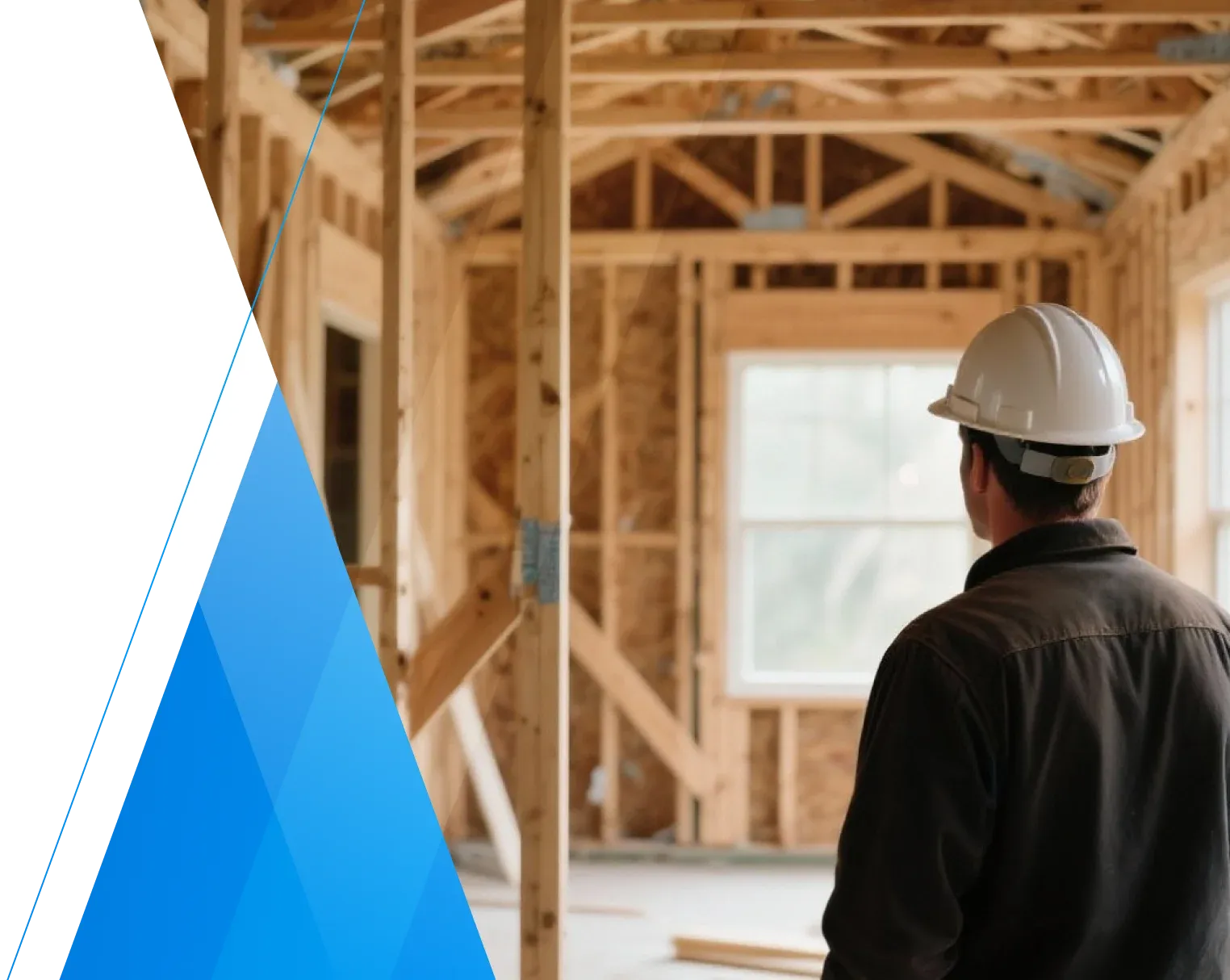
Builders & general contractors
The sub that does not move your schedule.
Insulation is a narrow window between framing and drywall. When it slips, everything behind it slips. We built our operation around not being the reason your job runs late.
What you get from us
We show up on the day
Insulation sits between framing and drywall. If we slip, your drywaller slips, and your whole calendar moves. Our scheduling exists to protect your sequence, not ours.
Bids back fast
Send plans or a scope and we turn a number around quickly. If you are bidding a job and need a subcontractor figure to build your own number, say so and we will prioritize it.
We pass inspection
Code minimum documented, R-values certified, depth markers installed. The inspector finds what the plans said they would find.
Clean handoff
Site cleaned, debris out, cavities ready for the next trade. Nobody on your crew should have to work around our mess.
Work we take on
New construction
Batts, blown or spray foam, walls and ceilings, to spec or above it. We would rather talk to you at framing than at drywall — the conversation about exceeding code minimum is a lot cheaper before the cavities close.
Spray foam
Open and closed cell, where the assembly calls for it — rim joists, cathedral ceilings, bonus rooms over garages, and anywhere you need air barrier and R-value from the same product. Tell us the assembly and we will tell you honestly whether foam earns its cost there or whether blown does the same job for less.
Additions and bump-outs
Tying new construction into an existing envelope is where a lot of comfort problems get built in. The junction between old and new needs actual thought, not a batt jammed in the gap.
Renovation and gut jobs
Open walls are the one chance to do this properly. If the drywall is already off, dense-pack and air sealing cost a fraction of what they will cost the homeowner in five years.
Multi-unit and repeat volume
Consistent pricing across a run of units, and a crew that already knows your details by the third building.

Do not settle for code minimum
Code minimum is a floor, not a target. It is the least the law allows, written as a compromise, and it is what your competition is delivering.
A house insulated meaningfully above minimum is quieter, more comfortable in a Michigan February, and cheaper to run — and those are the things the buyer notices in year one and tells people about. The incremental cost at framing is small. The cost of retrofitting it later, after drywall, is not.
If you want to talk about where above-minimum actually pays back on your spec and where it does not, that is a conversation we are happy to have before you finalize a scope.
Where the callbacks come from
Almost every insulation-related callback we have seen on new construction traces to one of three things: an assembly detail nobody thought through at the junction of old and new, a mechanical chase left open from basement to attic, or insulation installed to the letter of the spec around ductwork and can lights that were never sealed.
None of those are material failures. They are sequencing and attention failures, and they are the reason we would rather be on site early than just show up with a truck when the framing inspection clears.
Contractor questions
Do you offer trade pricing?
Yes. Contractor and builder pricing is structured differently from retail homeowner work, and it improves with volume and predictability. Tell us what your year looks like and we will price accordingly rather than quoting you off a homeowner sheet.
How fast can you get a bid back?
Quickly, and faster if you flag it as time-sensitive. Mention the bid deadline when you send the scope — if you are building a number for a client, we would rather rush ours than cost you the job.
Can you hit a specific R-value or code requirement?
Yes, and we document it. Certified R-values, depth markers, and paperwork that satisfies inspection. If the plans call for something we think is a mistake for the assembly, we will raise it before we install it rather than after.
What happens if the schedule moves?
Schedules move — that is construction. Tell us as early as you know and we will work with it. What we will not do is take your slot and give it to someone else without telling you, or quietly slide you a week because a bigger job came in.
Do you work outside Oakland County for trade jobs?
Our residential service area is tighter than our trade radius. For contractor work with real volume, ask — we travel further for a project than for a single attic. Call and we will tell you honestly whether we can commit.
Send us a scope.
Plans, a spec, or a rough description — we will turn a number around fast. Note your bid deadline in the message and we will prioritize it.