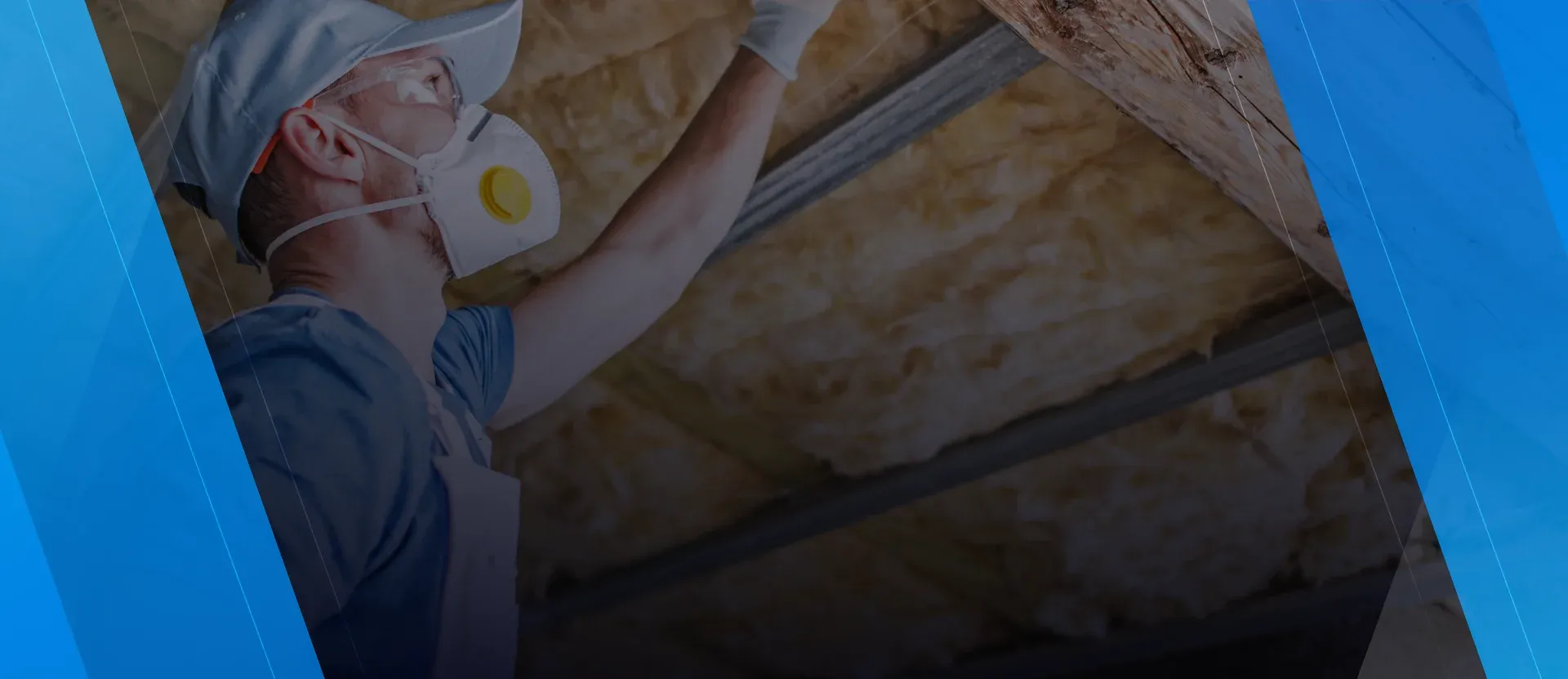
Attic Insulation in Metro Detroit
Blown-in cellulose top-ups in a single day.
Up to 40% of your heat is leaving through the attic, and most homes here have about half the insulation they should. We top yours up over what is already there — no demolition, no tear-out.
- 20% energy savings
- 1 day typical install
- 30-year lifespan
- Recommended here (DOE Climate Zone 5)
- R-49 to R-60
- What most pre-1980 homes measure
- R-11 to R-19
- Typical attic install
- 1 day
Family-owned
Based in Southfield, not a franchise
Most jobs, 1 day
In and out, cleaned up behind us
Free assessment
We measure before we quote
Spotless finish
We leave it better than we found it
Why insulation
Cold floors. A room nobody uses. Ice at the edge of the roof.
These are not separate problems. They are the same problem showing up in different places — warm air escaping through the ceiling plane and cold air pulled in low to replace it.
The ice is the one that costs people the most, because it usually gets misdiagnosed as a roofing issue. Heat escaping into the attic warms the roof deck, snow melts, the water runs to the cold overhang and refreezes into a dam that backs meltwater up under the shingles. The roof is fine. The attic is leaking.
Sealing the attic plane and bringing the depth up is what actually stops it — and it is the same work that stops the cold floors and the room you gave up on.
What we do
Most of our work is attics, because that is where the money is for most homes here. The rest of this list exists for when the attic is not the problem.
Attic Insulation
The highest-return insulation work in almost any Michigan home. We top up over what you already have — no tear-out.
Blown-In Cellulose
The material we reach for first in Michigan attics — and an honest account of when we do not.
Wall Insulation
Cold walls make cold rooms. We insulate closed walls from the outside in, without gutting your house.
Crawl Space & Basement
Cold floors and damp air come from below. We seal the rim joist and stop the cold before it reaches your feet.
Removal & Replacement
When the old material genuinely has to go — contamination, water, mold — we take it out clean and start over properly.
Our process
How it goes, start to finish
We measure what you actually have
A ruler in the existing insulation, a look at the sheathing, a check of the soffit vents. Half an hour, no charge, no obligation.
You get a number and the reasoning behind it
What we found, what we would do, and what it costs. If the work is not worth it for your house, we say so.
We seal, baffle, and blow to depth
Air sealing first, baffles at the eaves, cellulose to a settled depth with markers stapled to the trusses so you can verify it.
We clean up and leave it better than we found it
Floors vacuumed, the route cleared, every scrap hauled out. The only trace we leave is a warmer house and a furnace that finally gets a break.
Testimonials
What Metro Detroit neighbors say
“Called Fill It on a Thursday, had my quote Friday, and they finished the job Monday. My house has never been more comfortable.”
“Best investment I've made in my house. We're finally warm all winter—and our energy bill dropped by $90/month!”
“Finally found an insulation company that actually shows up when they say they will. Professional, clean, and the results speak for themselves.”
Where we work
Southfield · Royal Oak · Birmingham · Troy · Berkley · Bloomfield Hills · Farmington Hills · Rochester Hills · Ferndale · Clawson — and more across Oakland, Wayne and Macomb counties.
Full service area →Common questions
Do I need to remove my old attic insulation first?
Usually not. If the existing material is dry, clean and rodent-free, we blow cellulose right over the top and it keeps working underneath. Removal is only necessary for rodent contamination, water damage or mold — and we check before quoting rather than assuming.
How much insulation should a Metro Detroit attic have?
We are in DOE Climate Zone 5, where R-49 to R-60 is recommended for attics. Most pre-1980 homes here measure R-11 to R-19, which is roughly three to six inches. Closing that gap usually means adding ten to fourteen inches of blown cellulose.
How long does the work take, and do I need to leave the house?
Most attics are a one-day job and you can stay home. The work happens in the attic with the hose run through a window or door. We protect the floors along the route and vacuum up before we leave.
Do you work with builders and contractors?
Yes — new construction and trade work is a real part of what we do, with pricing and scheduling built around a build calendar rather than a homeowner timeline.
Find out what your attic is actually costing you.
Free assessment, measured depth, honest numbers. We tell you if you do not need the work.